
Cleaning Glass Reactors and Filter Dryers
The vessel decides whether a cleaning cycle can work. The CIP system decides whether it does, batch after batch. In drug substance manufacturing, you need both halves designed together.


The Multi-Product Problem
The stakes for cleaning in a multi-product API facility have gone up. Carryover limits now come from health-based exposure data rather than fixed rules of thumb, and for potent compounds those limits get very small. The cleaning cycle is not a housekeeping step. It is a validated process with its own acceptance criteria, and it has to pass swab and rinse sampling at every changeover, on equipment that runs a different product next month.
Drug substance equipment makes that hard in a specific way. A glass-lined reactor finishes a campaign coated in product, reaction residues, and solvent. An agitated filter dryer finishes with a compressed heel of cake on the filter media, product in the seal recess, and dust in the top-mounted filter bags. These are the hardest residues in the facility, sitting in the equipment with the most internal geometry, on surfaces whose chemistry and temperature limits the cleaning cycle has to respect.
No single vendor owns this problem, which is exactly why it goes unsolved. The vessel determines whether a cleaning cycle can ever reach the residue. The cleaning system determines whether it actually does, reproducibly enough to validate. What follows takes the two halves in turn: what 3V Tech builds into the vessel, what McFlusion brings to the cycle, and where they have to meet.
What 3V Tech Builds Into the Vessel
Glass-lined steel and borosilicate glass are the default materials for corrosive API service, and they happen to be excellent cleaning surfaces: smooth, non-porous, chemically inert, with low product adhesion. With glass and PTFE contact surfaces there are also no metal ions to leach into the next batch. But glass has two properties every cleaning cycle has to be written around:
| Glass property | What it means for the cleaning cycle |
|---|---|
| Alkaline sensitivity | Hot, concentrated caustic attacks glass over time. Caustic washes need controlled concentration and temperature, verified by conductivity, not poured in until it looks clean. |
| Thermal shock limits | Glass tolerates a limited sudden temperature change. A hot vessel hit with cold pre-rinse water, or a cold vessel hit with a hot wash, is how linings crack. Cycle steps need staged temperature ramps. |
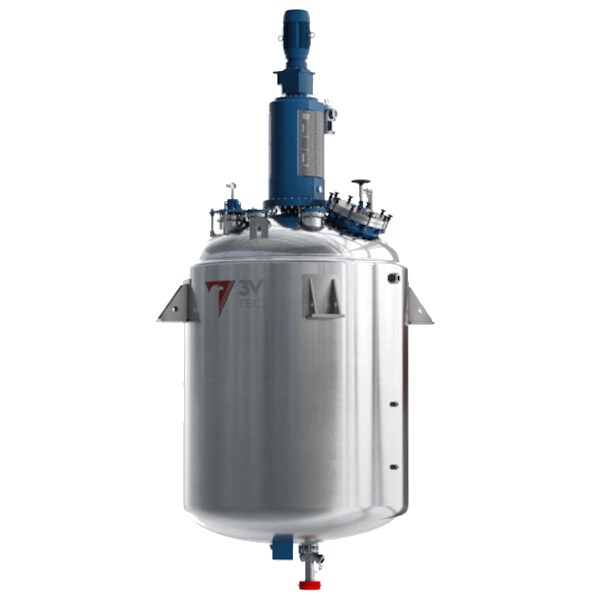
On the reactor, cleanability shows up as design choices that later show up in swab results:
- Two-piece construction. 3V Tech’s AE-type reactors separate the cover from the vessel body, so the cover can come off for inspection and periodic deep cleaning. What you can see, you can verify.
- Complete-draining bottom valves. A cleaning cycle that ends with liquid pooled above the outlet valve is a cycle that ends with residue. Fully draining valve designs remove the most common dead spot in the vessel.
- Washable sampling paths. Sampling probes with circulation washing mean the sample line gets cleaned with the vessel instead of becoming a separate manual task.
- Lining integrity monitoring. Probes that detect glass-lining failure matter to cleaning too: a damaged lining is a rough surface that holds residue and corrodes the steel beneath it.
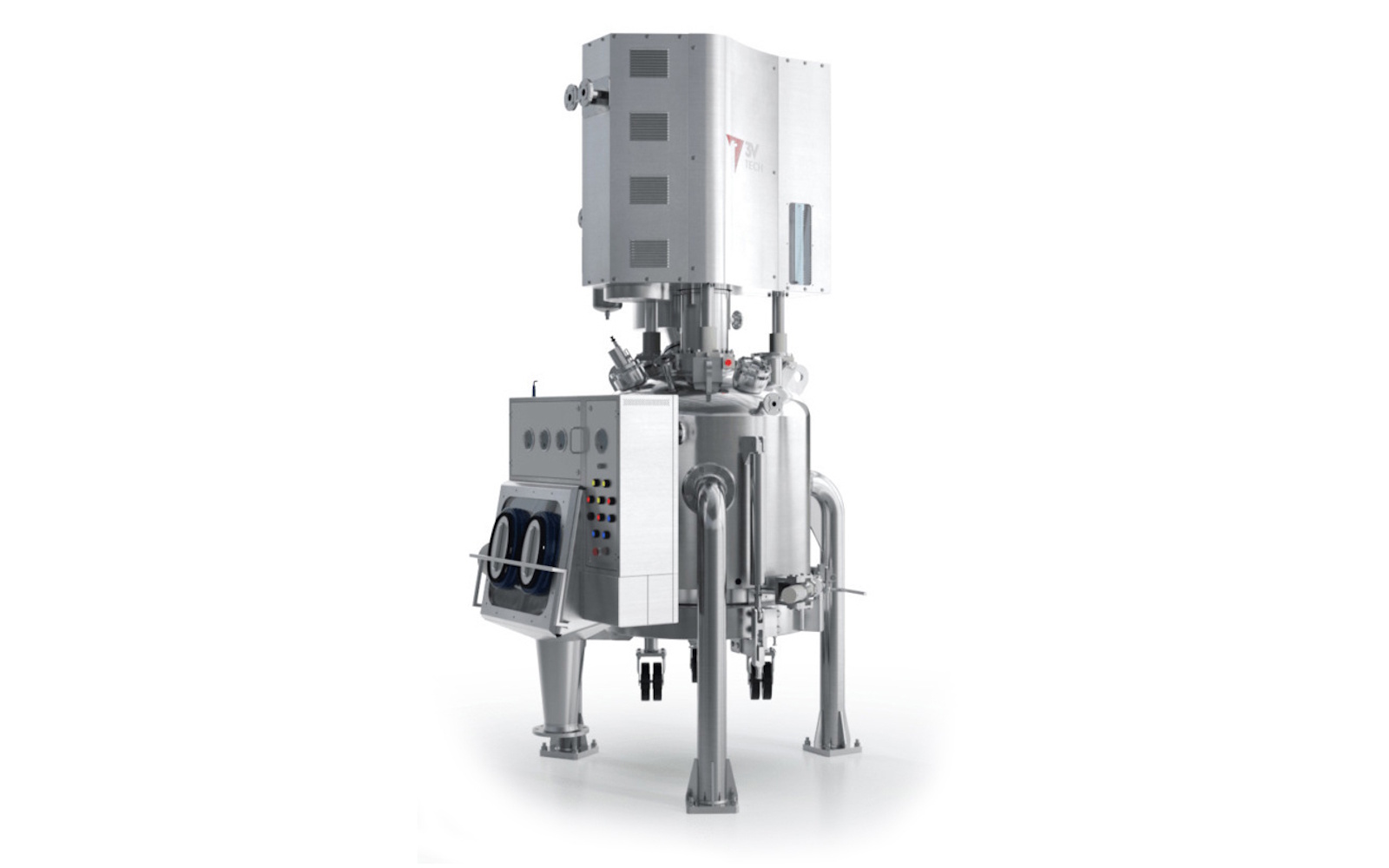
The filter dryer is where this thinking matters most. 3V Tech builds its Filtrodry units with dedicated internal cleaning infrastructure for each known hard-to-reach zone: vessel spray balls for the main body, a spray ring for the seal recess, separate spray balls for the dust filter housing, and spray nozzles at the discharge hatch. Rather than hoping one spray ball reaches everything, every trap has its own coverage. And the vessel’s own functions double as cleaning steps: a re-slurry wash, filling the vessel and re-suspending the heel with the agitator, removes the bulk residue before the CIP cycle even starts.
What McFlusion Brings to the Cycle
All of that hardware is potential, not proof. Spray balls in the right places clean nothing until something delivers the right flow, pressure, chemistry, and temperature through them, in the right order, every time, with a record. That is McFlusion’s half, and on difficult equipment it starts before any skid is specified.
Coverage is engineered, not assumed. McFlusion selects spray devices, static nozzles and rotary spray arms, by assessing the specific equipment geometry and product residue characteristics with 3D spray modelling, then validating the selection with physical coverage and cleaning tests. For a vessel as internally complicated as a filter dryer, this is the difference between believing the seal recess gets wet and having watched it happen before cycle validation starts.
Cycles are developed on real residues. Bench-scale product removal testing and full-scale cleaning trials in the customer facility come first, so the recipe is built against the actual heel, not a clean-water assumption. This is a delivered service, not a suggestion in a manual.
Every parameter is controlled and recorded. The cycle runs on recipe-controlled time, mechanical action, coverage, chemical concentration, and temperature, with full instrumentation. Conductivity does double duty: confirming caustic strength stays inside what the glass lining tolerates during the wash, and verifying absence in the final rinse. Every run ends with a cycle report, so changeover documentation writes itself.
The delivery architecture is a real decision, not a catalog default:
| Architecture | What it is | Where it fits |
|---|---|---|
| Portable unit | Wheeled CIP or combined CIP/SIP unit, docked to one vessel at a time | Multi-product suites where flexibility matters; reactors and filter dryers cleaned per campaign; facilities avoiding long transfer piping |
| Fixed system | Frame-mounted skid serving several vessels through permanent piping | Dedicated trains with predictable scheduling and higher duty; steam-jacketed heating for hot cycles |
| Single-pass | Boosted-pressure solution delivered to the spray devices, then straight to drain instead of recirculating | Potent or hard-to-rinse residues where recirculation risks redepositing what you just removed |
And the changeover does not end at the vessel wall. Filter cloths, dust filter bags, and gaskets come out for replacement or out-of-place cleaning. McFlusion’s parts washer cabinets with custom racks, built for difficult-to-clean parts, turn that sink-and-scrub job into another repeatable, documented cycle.
Where the Two Halves Meet
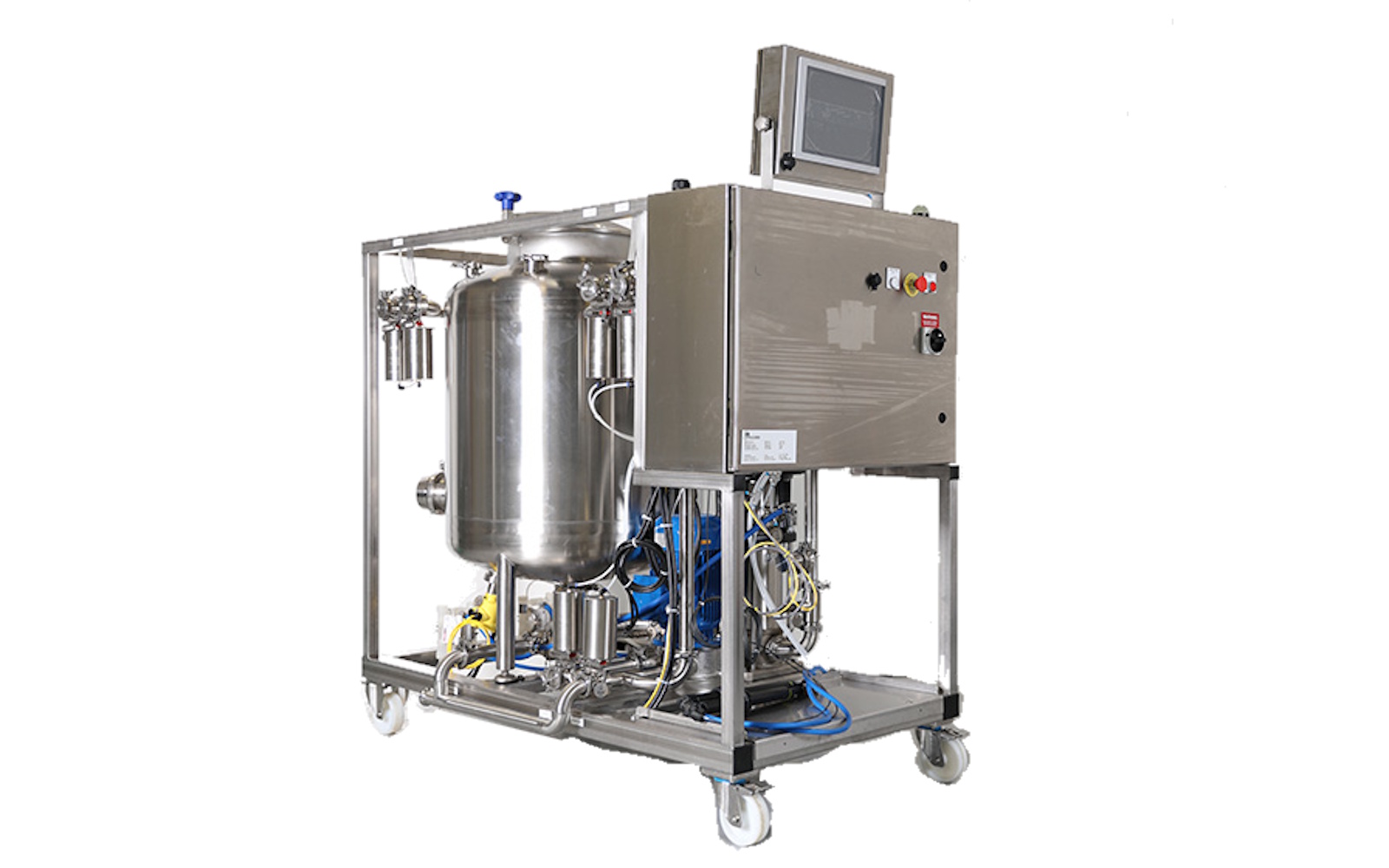
The failure points in drug substance cleaning live in the gap between two purchase orders. The reactor manufacturer knows the enamel limits. The cleaning skid manufacturer knows the cycle. Someone has to connect them, and it is much cheaper to do that during cycle design than after a lining inspection fails or a swab result comes back high.
Connected properly, the two halves reinforce each other:
- Chemistry and temperature written around the vessel. Caustic concentration held where conductivity confirms it, temperature ramps staged inside the glass lining’s thermal shock limits.
- Spray devices matched both directions. Sized to the vessel geometry by modelling and coverage testing, and sized to the flow and pressure the skid actually delivers.
- The vessel’s functions in the recipe. The filter dryer’s re-slurry wash as the programmed pre-clean step, complete-draining valves as the reason the drain step actually drains.
- One operator procedure. Docking stations give process vessels a standardized connection point with integrated return componentry, built for quick connection and disconnection of the portable unit, so docking is the same routine at every station, not tribal knowledge.
Related Pages
- 3V Tech: drug substance process equipment
- 3V Tech Glass-Lined Reactors: AE, BE, CE and ASME-code equivalents
- 3V Tech Filter Dryers (Filtrodry): agitated filter dryers with built-in cleaning systems
- McFlusion: CIP, COP and SIP systems
- McFlusion CIP Systems: portable and fixed architectures
- McFlusion Parts Washers: out-of-place cleaning for filter media and components
Specifying Cleaning for a Drug Substance Suite?
MHS Pharma represents both 3V Tech and McFlusion across the Northeast United States. We can help you evaluate reactor and filter dryer cleanability alongside the CIP architecture that serves them, as one workflow.
Contact MHS Pharma